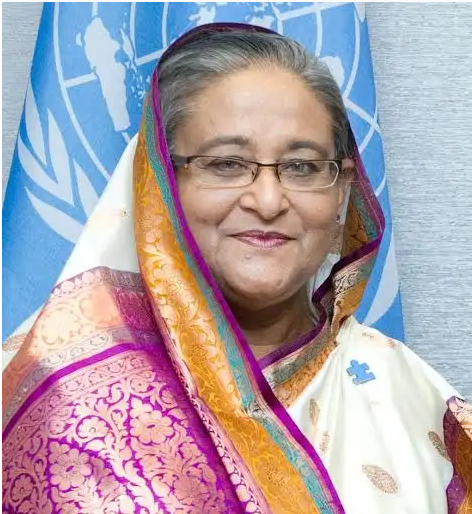
Ousted former Prime Minister Sheikh Hasina has said that she will return to Bangladesh to face court. She stated that she is prepared to return even at the risk of imprisonment or death. However, she claimed that the death sentence handed down against her for crimes against humanity during the suppression of the 2024 student-led movement is 'politically motivated.'
In a written interview with Japanese news agency Kyodo News, the 78-year-old Sheikh Hasina said, 'I will return to Bangladesh. I will appear in court. They may send me to prison, or even try to hang me. I know about that risk.'
In August 2024, Sheikh Hasina resigned from the post of Prime Minister and went to India in the face of a mass student-led movement. She has been staying there since. In November 2025, the International Crimes Tribunal of Bangladesh tried her in absentia and sentenced her to death for crimes against humanity.
The Bangladesh government has submitted an extradition request to India to bring Sheikh Hasina back to the country. The Indian Ministry of Foreign Affairs stated that it has received the request and is reviewing the matter in light of legal and judicial processes.
Meanwhile, the Prime Minister's Information Adviser, Zahed Ur Rahman, said in a press conference on the 14th of this month that the government is trying to bring Sheikh Hasina back to the country to face trial and that she will be given the opportunity to defend herself.
'Did not order killings'
According to UN estimates, about 1,400 people were killed in the 2024 movement. According to the organization, most of the victims lost their lives to gunfire from security forces. However, Sheikh Hasina denied the allegation of ordering these killings.
She said, 'If independent foreign forensic experts examine the cause of every death and which weapon or bullet caused the death, the truth will still come out.'
She claimed that the student movement later turned into an anti-government movement under the influence of political opponents.
Questions about the trial
International human rights organization Human Rights Watch expressed concern over the trial conducted in Sheikh Hasina's absence. However, the organization also stated that those responsible for human rights violations committed during her tenure must be brought to justice.
Call for restoration of democracy
Regarding the future of Bangladesh, Sheikh Hasina said in the interview that the country needs healing. However, she stated that reconciliation does not mean impunity.
She said, 'Those who have committed crimes must be brought to trial through proper legal procedures. If democracy is re-established and people are given the opportunity to determine their own future, the next decade can be a decade of recovery and a new journey.'
Highlighting the stability of South Asia, she said that a stable Bangladesh is important not only for the country but also for the entire South Asia, the Bay of Bengal region, and development partners like Japan.
Political context
The student movement started in June 2024 following a High Court verdict reinstating the freedom fighter quota in government jobs. Later, it turned into a mass anti-government movement. Widespread casualties occurred during clashes between protesters, law enforcement agencies, and supporters of the then-ruling Awami League.
After Sheikh Hasina left the country, an interim government took charge under Nobel laureate Muhammad Yunus. Later, when the BNP won the national election in February 2026, the party's acting chairman, Tarique Rahman, assumed office as Prime Minister. Earlier, in May 2025, all types of political activities of the Awami League were banned.
Source: Kyodo News