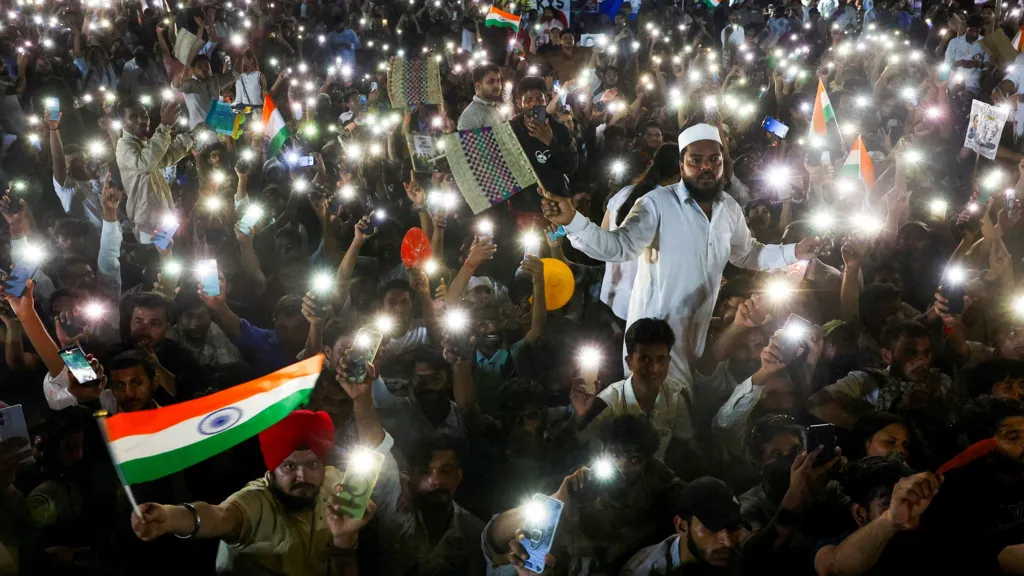
According to Delhi Police decisions, protests will no longer be permitted at Jantar Mantar as before. Demonstrators have been asked to move to three other locations. Among these, two are situated far from the Parliament House, and large venues like Ramlila Maidan require significant expenses to host gatherings. Consequently, the decision represents not merely a change in protest venue, but also raises concerns about the shrinking scope and opportunity for organizing movements in the capital.
A New Controversy Sparked by the Gen-Z Movement
In the summer of 2026, the Gen-Z-led Cockroach Janata Party (CJP) organized a major protest at Jantar Mantar. A massive number of people participated in the event demanding the resignation of Union Education Minister Dharmendra Pradhan. The subsequent resignation of the Education Minister also brought the movement into discussion.
Following this, police vigilance increased at Jantar Mantar, and the area was cordoned off with barricades. Last week, when CJP supporters attempted to march there demanding the resignation of India's Chief Election Commissioner, clashes broke out with the police. The police action to disperse the demonstrators sparked renewed controversy.
One potential explanation from some observers is that authorities may have feared the demands and programs of protesters getting out of hand after large gatherings. The tendency to take to the streets with harsher and more controversial demands after authorities showed leniency in previous movements may have worried the administration. However, no definitive proof has been published confirming these factors were decisive behind the decision to close Jantar Mantar.
Right to Protest, or Conflict Over the Limits of Demands?
In a democratic system, the right to protest for criticizing the government, demanding resignations, or policy changes is vital. However, administrative decisions also factor in questions such as how reasonable a movement's demands are, how peaceful its program is, and what impact it has on the movement of other citizens and public life.
The controversy generated within India's political and administrative sphere surrounding recent movements centers on this very balance. From the government's perspective, ensuring the security of large gatherings, law and order, and the protection of vital installations is crucial. On the other hand, the opportunity for protesters to raise demands from a location close to parliament and policymakers is equally significant.
Critics fear that if the administration adopts a hardline stance centering on a few movements, its impact will not be limited to the concerned organizations alone. Instead, ordinary citizens, affected families, laborers, farmers, and rights activists who have protested at Jantar Mantar for years will also suffer.
A Break in Three Decades of Protest Tradition
Jantar Mantar began its journey as a protest site in 1993. Previously, large gatherings took place at the Boat Club grounds opposite the old Parliament House. After demonstrations were banned there, the street beside Jantar Mantar became a vital gathering place for protesters.
In 2008, activists staged sit-ins there for months demanding justice for the victims of the Bhopal gas tragedy. Farmers, students, ex-servicemen, and workers from various social movements have also assembled at this location with their demands. Jantar Mantar played a role as a space for discussion and organization on various national issues, including food security, employment, and forest rights.
In 2017, initiatives were taken to halt protests there amid environmental and local resident complaints. However, in 2018, the Supreme Court struck down that decision, considering freedom of expression and the constitutional right to peaceful assembly.
Once again, petitions have been filed in court against the decision to exclude Jantar Mantar from the list of protest sites. Consequently, the future of the location remains undecided.
Will the Democratic Scope Shrink Alongside Movement Control?
Delhi Police state that this decision is part of initiatives to identify alternative protest sites with adequate infrastructure, following Supreme Court suggestions. However, questions have been raised regarding the distance, cost, and accessibility of the alternative locations. In particular, it may prove difficult for ordinary citizens and organizations with limited funds to sustain long-term protests at these sites.
If the experience of recent Gen-Z protests has pushed the administration toward a tougher stance, the repercussions could be far-reaching. It is the government's responsibility to prevent chaos or violence in the name of protests; simultaneously, maintaining opportunities for peaceful protest is an essential part of a democratic system.
Therefore, the imposition of restrictions on Jantar Mantar should not be viewed merely as the consequence of a single movement. It raises questions on one hand about the limits and responsibilities of utilizing protest opportunities, and sparks debate on the other regarding the justification of shutting down a historic protest site under the pretext of maintaining law and order.
Ultimately, the future of Jantar Mantar will be determined through administrative decisions, the court's position, and the political situation. However, if the tension generated by recent movements plays a major role in the loss of this historic protest site, the price may be paid not just by Gen-Z protesters, but also by countless ordinary citizens who wished to gather there in the future in pursuit of justice.