The pathway to extend stays by coming to Australia on a tourist or visitor visa is being closed. From now on, a 'No Further Stay' provision will be mandatorily attached to every visitor visa. As a result, no one will be able to apply for any other category of visa, including a partner visa, from within the country after arriving on a tourist visa.
Sydney: Driven by pressures of a growing housing crisis and rising cost of living in Australia, the country's government has imposed extensive crackdowns on its immigration policy. Major changes have been introduced to the rules for international students, backpackers, and visitor visas to bring net overseas migration down to a specific range.
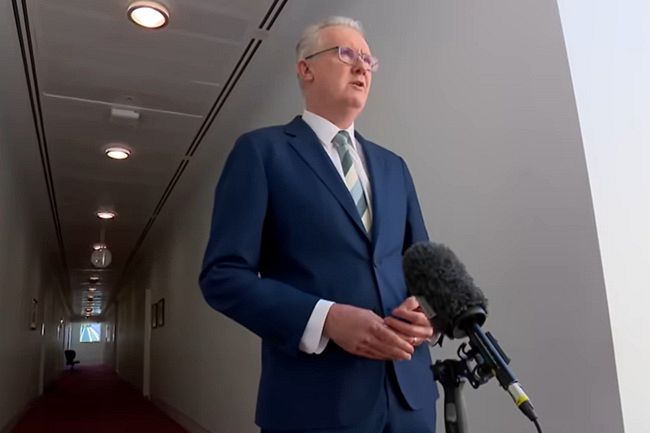
The country's Minister for Home Affairs and Immigration, Tony Burke, unveiled these new guidelines during an important announcement at the National Press Club in Canberra on Thursday.
According to the government's new plan, net overseas migration will be reduced to 245,000 by the 2026-27 fiscal year and subsequently brought down to 225,000 by 2027-28. According to data from the Australian Bureau of Statistics, net migration for the year ending March 2026 dropped to 292,100, the lowest in four years. Even so, the Albanese Government announced even stricter measures to rein in the migration sector.
Prohibition of family or dependents: From now on, international students and graduate visa holders are losing the opportunity to come to Australia with their families (spouse and children). However, exemptions to this rule have been maintained for PhD researchers and students from certain specific countries in the Pacific or Southeast Asia.
Halting 'visa hopping': Students will no longer be able to change courses at will or repeatedly renew their visas. Applications to extend visas will only be permitted upon progressing to a higher educational level (such as from a bachelor's to a master's degree).
A lottery or ballot system is being introduced for working holiday or backpacker visas, which are critically important for the agriculture and tourism sectors. To extend backpacker visas for a second and third year, a lottery or ballot system is now being implemented.
Quota reduction: From now on, only 45,000 backpackers will have the opportunity to stay in the country for a second year, and only 5,000 for a third year (compared to 57,000 and 31,000 previously, respectively). Alongside this, regional work conditions have been maintained.
The pathway to extend stays by coming to Australia on a tourist or visitor visa is being closed. From now on, a 'No Further Stay' provision will be mandatorily attached to every visitor visa. As a result, no one will be able to apply for any other category of visa, including a partner visa, from within the country after arriving on a tourist visa.
Priority areas: In skilled migration activities, applicants from the healthcare, construction, education, law enforcement, defense, mineral resources, agriculture, and fisheries sectors will be given priority. Particularly, construction sector professions are being given special importance to resolve the housing crisis.
Strict stance against unlawful residents: Currently, about 77,000 people are living in Australia illegally or with expired visas. Plans have been undertaken to appoint 100 new compliance officers to send them back to their countries and to convert Melbourne's quarantine center into a detention center. Furthermore, fraudulent and broker-type migration agents will face strict punishment, including the cancellation of their licenses.
A mixed reaction has been observed in the country's political arena regarding these strict immigration policies. Pauline Hanson, leader of the far-right 'One Nation' party, has claimed that the government was forced to reduce migration precisely due to their pressure. On the other hand, the opposition party has taken a stricter stance, demanding that net migration be lowered to 170,000.
Minister Tony Burke, however, denied political pressure, stating that these far-reaching reforms have been introduced keeping in mind the country's current housing capacity and economic realities.