The Tarique Rahman government has increased fuel prices by Tk 20 per litre in a single leap. Under the new rates effective Monday, diesel will be sold at Tk 135 per litre, kerosene at Tk 155, petrol at Tk 160, and octane at Tk 165. This sudden price hike has raised fears of increased transport costs and higher prices of daily necessities. At the same time, the pressure of additional expenses will fall on common people.
The Energy and Mineral Resources Division issued a notification on Sunday night announcing the new prices. Earlier in June, the prices of three types of fuel oil were increased. At that time, while keeping the price of diesel unchanged, the prices of kerosene, petrol, and octane were increased by Tk 5 per litre. Those prices remained in effect through July, August, and September.
Under the new decision, compared to March, the price of diesel has increased by Tk 35 per litre, kerosene by Tk 43, petrol by Tk 44, and octane by Tk 45.
Explaining the reason for the fuel price hike, the Ministry of Power, Energy and Mineral Resources issued a press release on Sunday. It stated that due to the ongoing war in West Asia, fuel oil prices and transport costs in the international market have risen since March.
The ministry claimed that although fuel prices in the international market have more than doubled, prices in the country have not been increased at the same rate. In addition, the difference in fuel prices with neighboring countries, the risk of smuggling, subsidies in the LNG sector, and the cost of social safety net programs were cited as reasons for the price adjustment.
However, it is feared that increasing the price by Tk 20 per litre at once will further increase the expenses of general consumers, transport workers, farmers, small traders, and low-income people. The impact of the fuel price hike may fall on transport fares and product shipping costs.
The prices of four types of fuel oil were also increased in several phases earlier this year. At that time, diesel was raised from Tk 100 to Tk 115, octane from Tk 120 to Tk 140, petrol from Tk 116 to Tk 135, and kerosene from Tk 112 to Tk 130.
Subsequently, in June, the price of kerosene was set at Tk 135 from Tk 130, petrol from Tk 135 to Tk 140, and octane from Tk 140 to Tk 145. The price of diesel remained unchanged at Tk 115.
When the new rates take effect on Monday, fuel oil prices will increase by a large amount again within the span of a few months.
Since March 2024, a system of monthly adjustments of fuel oil prices in alignment with the international market has been in operation in Bangladesh. This method considers various issues including international market prices, import costs, duties and taxes, the US dollar exchange rate, VAT, and distribution costs.
Sunday's notification provided details of the new fuel oil pricing structure. It determined the consumer-level price by adding refinery release prices, VAT, duties, marketing company margins, transport costs, and dealer-agent commissions.
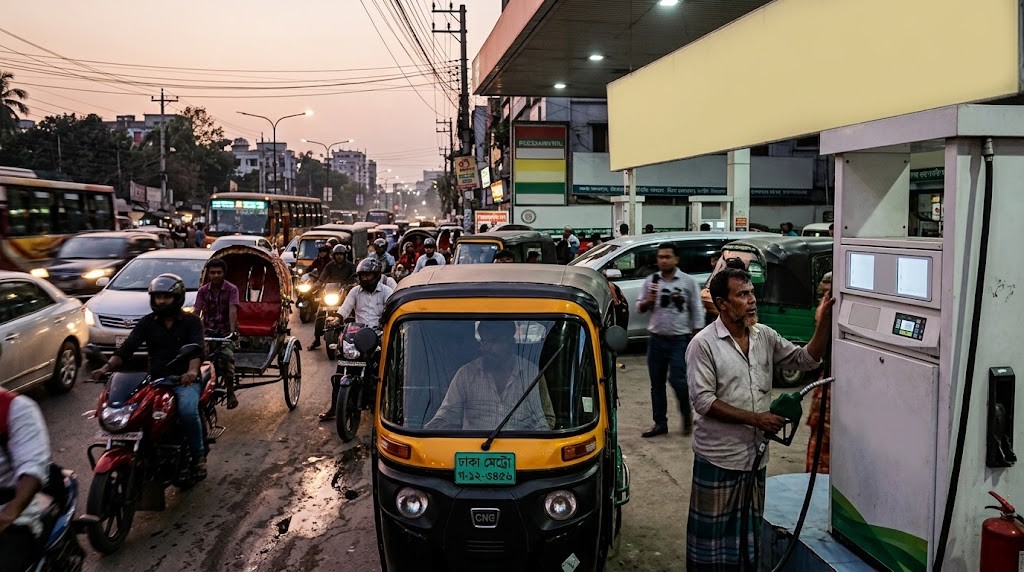
Meanwhile, long queues formed at filling stations in Rangpur and Jashore to purchase fuel at old prices before the new rates came into effect. Drivers rushed to the pumps with motorcycles and various vehicles. Many expressed anger over the hefty amount of the price hike.
Some drivers said that even if prices were increased by Tk 2 to Tk 4 per litre, the matter could have been accepted. However, increasing it by Tk 20 all at once will further increase their daily expenses. Private service holders and low-income people also expressed concern that it would be difficult to manage the extra expenses.