Discussion on the Crisis, Potential, and Future of the Film Industry in Sydney
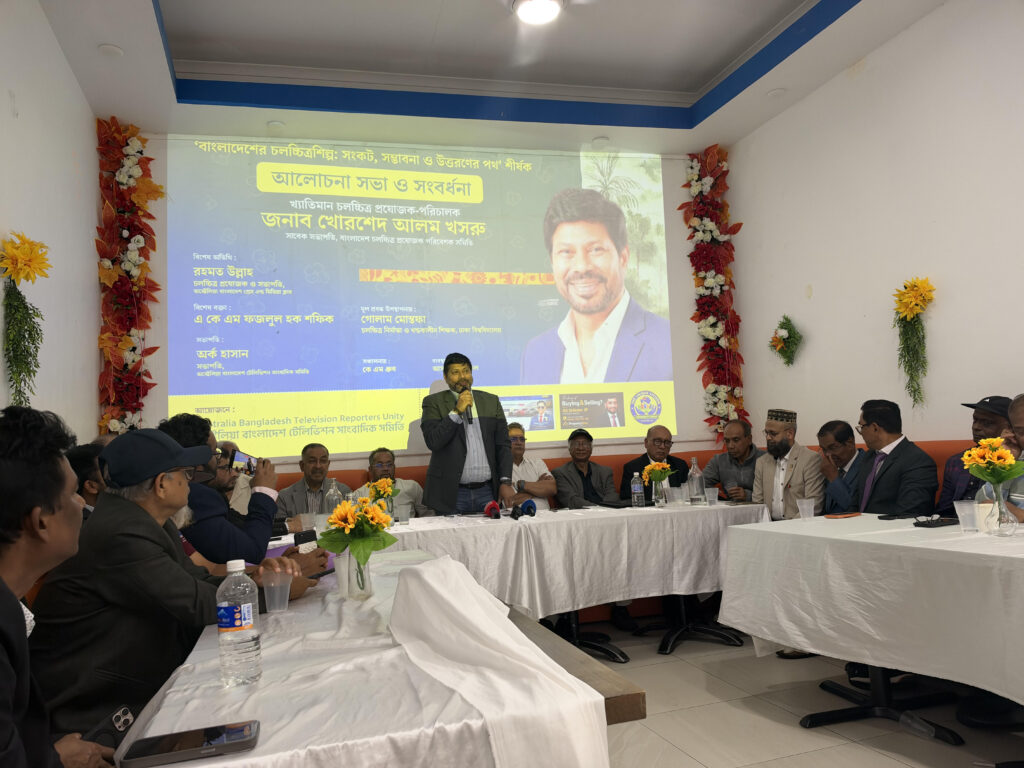
Speaking at a seminar and reception titled "Bangladesh's Film Industry: Crisis, Potential, and Way Forward" held on Thursday, October 22, at 6:30 PM, Khosru recalled the glorious past of Bangladeshi cinema and expressed hope for reviving the industry through quality production, modern technology, and effective policies.
The event was presided over by Arka Hasan, president of the Australia Bangladesh Television Journalists Association, and conducted by KM Dhruv. Rahmat Ullah, film producer and president of the Australia Bangladesh Press and Media Club, attended as a special guest. AKM Fazlul Haque Shafique spoke as a special speaker, and filmmaker and teacher Golam Mostofa presented the keynote paper. Leaders of the Sydney Bangladeshi community and other prominent figures were also present.
In his response to the reception, Khorshed Alam Khosru shared his experiences from a difficult period in the film industry. According to his statement, extensive operations were conducted with the assistance of the army and police to eliminate obscene cut-pieces and pirated content from films. He stated that he participated in operations with joint forces, seizing two trucks filled with pirated cut-piece cassettes and related equipment. He also mentioned filing approximately 450 cases against dishonest cinema hall owners and related individuals involved in piracy. Recalling those efforts to restore a healthy environment for cinema, Khosru emphasized the necessity of industry protection, law enforcement, and responsible roles for all concerned.
Khorshed Alam Khosru also spoke about his produced film "Jibon Jontrona". According to him, the film, centered on the life struggles of the transgender community, was an effort to highlight the experiences of marginalized people in society. The late film hero Manna acted in the movie. Khosru stated that the dubbing of the film was not completed before Manna's death. His recollections of the film highlighted the importance given to social reality, human stories, and the lives of marginalized people in Bangladeshi cinema.
Highlighting the historical significance of Bengali cinema, Khosru remembered Zahir Raihan's timeless works "Jibon Theke Neya" and "Behula". His remarks underscored that film is not merely a medium of entertainment; it is an important document of a nation's history, culture, social change, and human values. The discussion emphasized the need for new-generation filmmakers to create more creative, timely, and internationally standard films while embracing this heritage. Expressing optimism about the future of Bengali cinema, Khosru stressed the importance of reaching Bengali-speaking audiences living in various countries around the world, noting the potential audience pool of approximately 340 million Bengali speakers.
According to him, if Bengali films can be brought to international OTT platforms like Netflix and Amazon Prime Video, it is possible to create new audiences abroad. However, achieving that goal requires more than just releasing films on platforms; it demands advanced cinematography, Dolby sound, quality color correction, professional post-production, and presentations suitable for international viewers. To compete in the global market, professionalism must be ensured at every step, from filmmaking to marketing and distribution. To advance Bengali cinema, equal importance must be given to technology, policies, quality stories, and international distribution alongside respecting tradition.
For Bangladeshis living in a multicultural city like Sydney, Bengali cinema is not just entertainment; it is also a medium to maintain a connection with their language, culture, and roots. If quality films can be delivered to expatriate audiences, it will simultaneously increase the promotion of the Bengali language and culture while creating new audiences and revenue opportunities for filmmakers. However, turning this potential into reality requires effective initiatives such as communicating with international distributors, regular screenings in the expatriate community, subtitles, digital marketing, and copyright protection.